New Posts everyday.
Follow along at
Thanks for the support.
Looking to change hosts for my blog. Contact page has not been functional. In the meantime if you would like to get in touch with me I can be reached on Instagram @rearickbruce or Twitter @burntedgeputts. Message me there and I will share more contact information.
Thanks for following!
Disclaimer - I am an affiliate for WellPutt. If you are interested in any of their products feel free to reach out to me by email and I would be glad to assist you.
Breaking the Average Barrier
Five Reasons you might Miss a Putt
I believe one of the reasons we don’t see an improvement in putting statistics at any level is that we really don’t address the issues that cause you to miss a putt in the first place. So for what is worth, I offer these suggestions on why a great stroke might result in a missed putt.
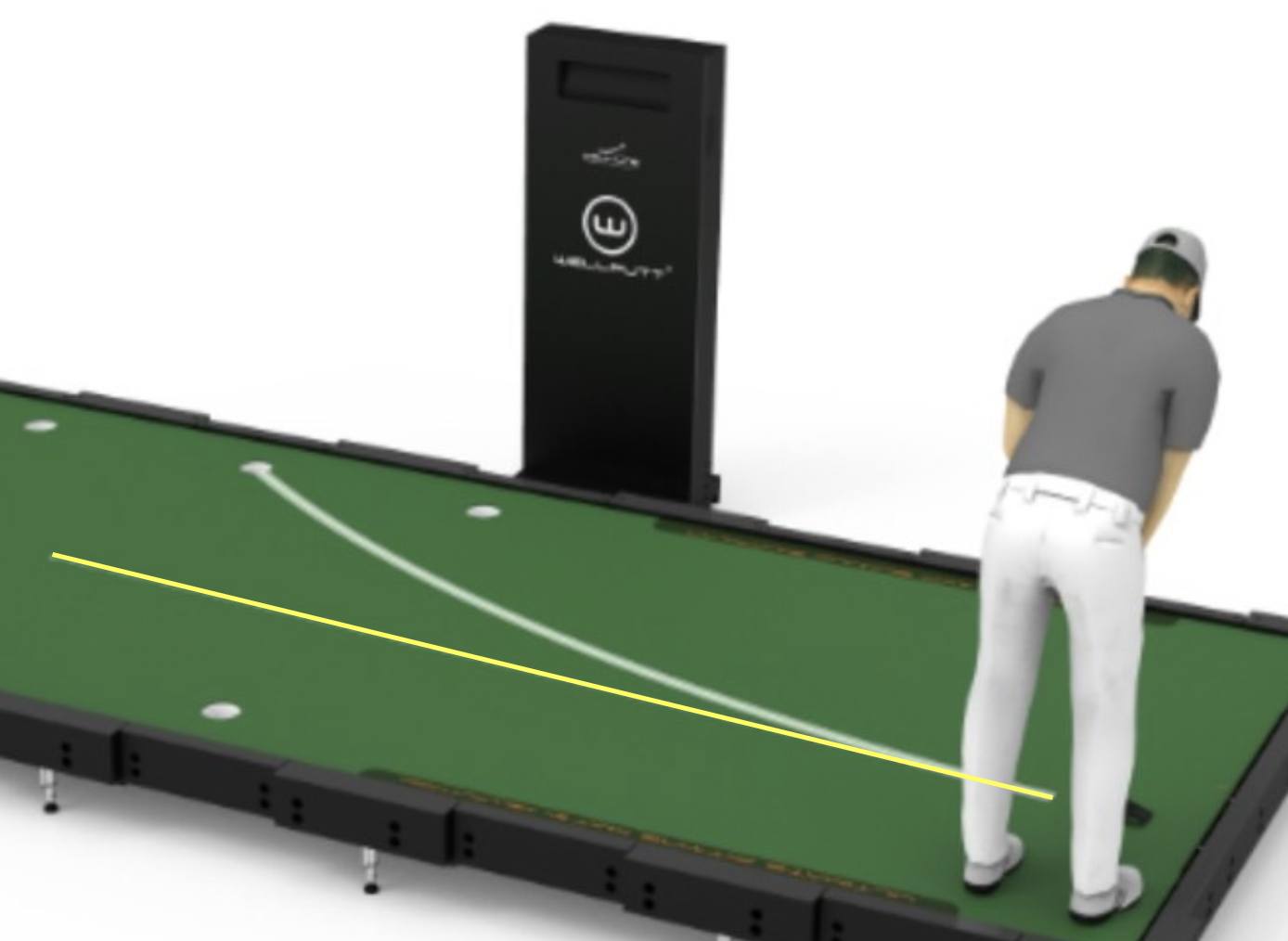
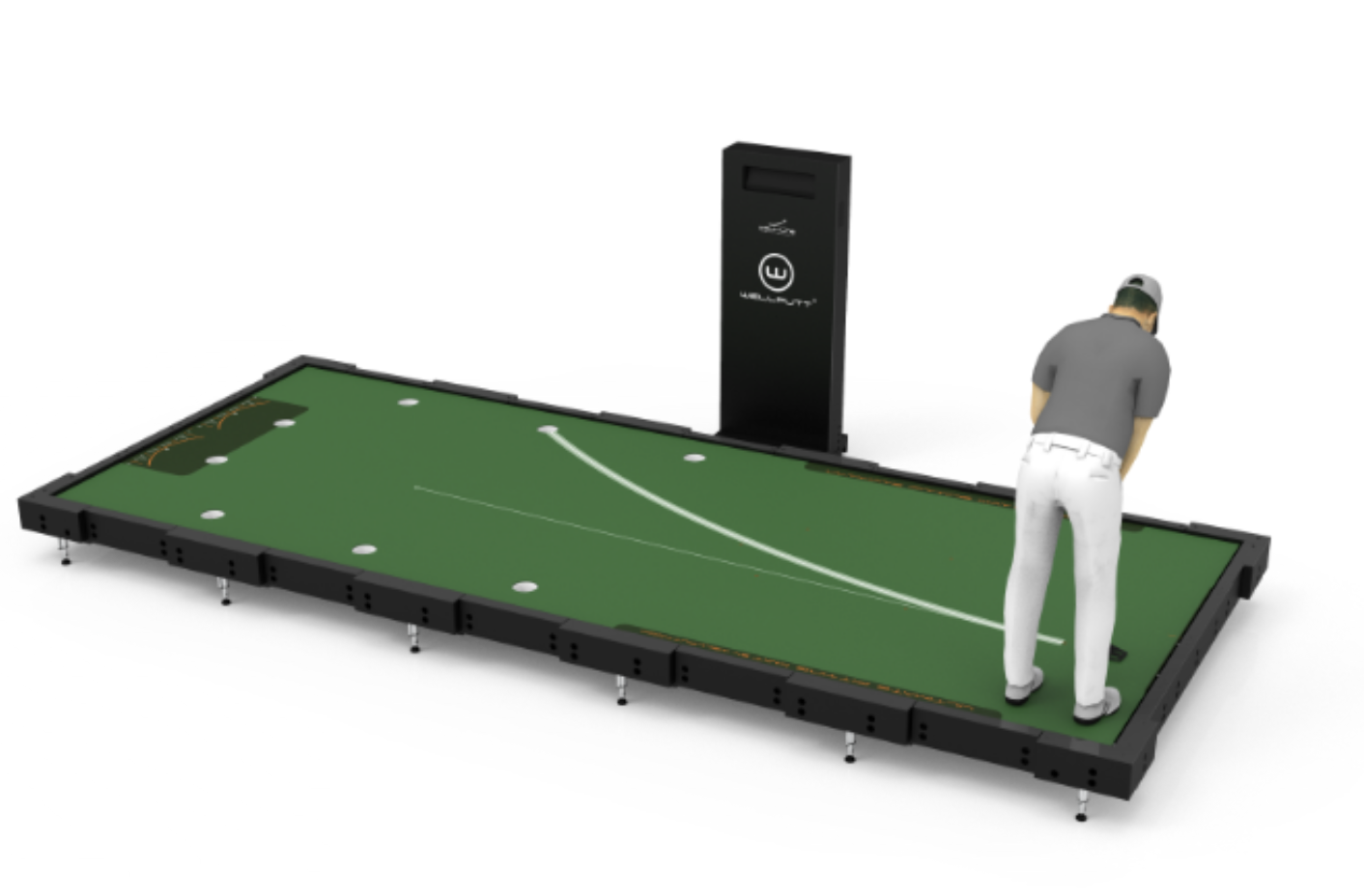
5. Let’s start with the obvious one, a poor read. This is always going to be a work in progress, as every putt will be unique. Even the exact same putt can change depending on the day. Often the inability to find an appropriate start line or direction is more of a problem than seeing the actual break. I have recently had some experience with the WellPutt Big Tilt and WellLine Visualization System. It is amazing to see the reaction of players, when the start line is projected along with the actual path to the hole. It is almost never what was expected and often they don’t believe it until they hit the putt. Understanding the metrics of a rolling ball is important to being a better putter. https://wellputt.com/us/cms/17-bigtilt-contact
4. Inability to strike the ball on a consistent point on the putter face. As we look to develop a feel for speed, how fast the ball leaves the putter and in what direction it travels it is an enormous help to strike the ball on a consistent spot on the putter. Years ago Dave Pelz showed that the better the putter the smaller the dispersion of impact points on the putter face. There is no getting around it. If you don’t strike the ball where you set the putter in the first place, the odds of the putt being missed climbs dramatically. I will leave the discussion of “more forgiving” for another time. We are talking about made putts as opposed to narrow misses for the purpose of this discussion.
3. Bad Balance. One of the great understandings I have developed from my work utilizing concepts from Mike Adams, Terry Rowles and the Ultimate Golf Lesson is the concept of how we use ground forces for STABILITY when we putt. I look to find an anchor point in the stroke. This is measured from front foot to trail foot and from heel to toe and it is unique for each player. Why? It is very simple. If you are off balanced based on individual tendencies during your stroke - YOUR HANDS WILL REACT - and a subconscious movement that repeats itself becomes a conscious one that has to be manipulated.
https://theultimategolflesson.com/
2. Poor Trail Hand Orientation. The biggest battle most of us have in our putting stroke is how to control the trail hand. Another huge discovery I received from the measurements of the Ultimate Golf Lesson is how different players have impact tendencies in the orientation of their trail hand. Matching these tendencies to your static grip is crucial in controlling the putter Speed and Direction in equal measure. Game Changer!!
 |
| https://theultimategolflesson.com/ |
1. Consistent Ball Position. If your stroke repeats, the ball position required relative to the center of rotation of the stroke must repeat as well. I use the balance point of the body at the base of the neck as the reference. Where the ball positioned relative to this point is often the difference between make and miss. You spend a great deal of time learning a repeating stroke, but much less time finding a repeating ball position relative to the stroke. So if the ball is positioned a little forward or back of the correct point this results in enough variance in the strike to miss the putt. Watch the very best putters on television. Notice how meticulous they are in their set up. It is a critical part of their success.
If you would like to go into depth, I have some open spots available for stroke evaluations. We have developed a system that allows me to achieve this online and has been proven to be helpful for a number of players. It takes about 30 days on average to go through the process and requires a cell phone to take videos. A helper or tripod is useful as well.

As I continue to compare average performances on the putting greens with an exceptional ones, rarely do I hear comments about the quality of the putting stroke. More often I hear comments about the ability to see or predict the path of the putt, "I could really see the line today." Or a comment like, “ I had a good feel for the greens today.” You can call this aspect of putting a number of things. Read, visualization, decision making, and many more are accurate descriptions of the pre-putt process. Being an old guy, I prefer the term visualization, as that is the phrase that my mentors used to describe the process. So for the sake of this discussion let's use that term.
As I was taught, visualization is a two part process. First part, the ability to “see or picture” the path the ball will travel as I calibrate the texture of the grass and the influence of the slopes. The second part is the ability to “feel” how much effort will be required to match what I see. Think of this combination, as a complete rehearsal of the upcoming event in your head.
The secret of visualization is the ability to match what you see to how it will feel.
As every player and every putt form a unique combination, there is no possible “one size fits all” solution to this problem. The following are some thought provokers on how to build your visualization strategy.
These are some of many questions I ask in my sessions online or face to face. Each answer produces the next question. It is interesting how these understandings lead to answers of mechanical problems much like a discussion of mechanical issues help visualization skills. The key point is they are not separate. Feel or mechanics have to match visualization or decision process.
I have been fortunate to have had a number of inquiries recently pertaining to my live instruction and online lessons. I would like to publicly express my gratitude for the opportunity to work with players and instructors from all over the world.
The following describes the two online programs I offer.
The fee for an online lesson is $250.00. It consists of 4 parts.
I consider strategic decisions and speed control issues a different lesson, as we can’t really have that discussion without an understanding of the first. Same fees apply.
Obviously, this takes some time. The fee covers the time required, with no additional charges. We work at your pace.
The second is the unlimited program. There is a onetime fee of $1000.00. It is a comprehensive look at my system and how we make the 4 decisions and how those decisions apply to strategic decisions. This program puts me on a retainer. I use FaceTime, video and text to walk you through the system. It includes a course 490 page course guide to use a reference. The guide is updated occasionally and all updates are included. Should we have the opportunity to meet face to face, as a participant of the unlimited program there is no charge. It also includes all Zoom open forum meetings, we plan to start after the first of the year.
You can reach me through the contact page, I normally respond quickly and will include all contact information in the reply.
Recently, I was listening to a broadcast where a putting instructor was describing the reason his client made a recent putter change. I was having a challenging time following the reasoning. With my online work, the first thing I usually do is build a model of the player, this allows me to adjust on the model rather than having to ask the player to experiment. If I make this adjustment to the model how would that influence the stroke? So, I built a model to help me think it through.
Please understand that I offer this as an example of how I analyze a putting stroke and it in no way is intended to contradict or criticize someone else’s take on the situation.

This is the model of the player. The purple line is a reference to balance over the feet from heel to toe. The angle of red line and black line helps me understand how far the player is from the ball. The black line happens to be under the eyes in this case, which is not always true. Each model will differ. The grey arrow helps me understand the plane of motion, defined by the source and sequence of motion. There are three basic source categories and successful examples of each. Core/Shoulder rotation, Shoulder Joints and Arm swing, or hands swing, and body reacts. The coach defined the stroke as a core/shoulder source.
The problem as he described it was an excessive rotation of the putter head, which created an open face at impact and a push miss. So, if you ask, “Why would this model have more rotation than would be required to keep the putter in a consistent position relative to the path?”; the answer would be found in an examination of the shoulder blades relative to the ball or the purple arrow. Anytime the grey arrow is above the red distance angle, and the shoulders activate the motion, we see more rotation than is required, assuming no other manipulation of the putter. You might comment that the shoulder joints could move on a vertical rocking motion, but in that case the head would move forward on the back swing and away from the target on the forward swing. He doesn't move his head. Given this player’s level of success the argument could be made that the putter is doing exactly what it is supposed to do. Tiger Woods has done very well with more rotation than required. The argument for this player could be made that the problem is not as much the extra rotation in the backswing, as it is the lack of release, or forward swing rotation. So why does he block?
For most if not all, of the best strokes we have analyzed, we see a common theme, the base of the neck over the tips of the toes as shown below. The reason this is important is quite simple.
When the player is tilted too far toward the ball,
like the model, they get stuck and can’t finish the stroke.

Now the discussion becomes, does the player push because of too much rotation, or does the push come because he can’t finish the stroke when he leans into the ball?
My solution if I was ever asked would be to keep the putter you have, stop leaning into the tips of your toes and let the putter swing. Your rotation through the ball might be the best part of your putting stroke.
“It is much more important to understand what a putt feels like as opposed to what it looks like.”
I do not think anyone would argue that ball speed control is critical to being better than average at putting. I contend that you are more likely to see the break than you are finding the correct effort to match the read. I would also submit that it is an area of weakness from an instruction perspective. As I speak to other instructors about this subject the following are some of the questions I ask and comments I submit.
1. How do you judge the distance?
Do you take visual snapshots?
Do you take a visual video?
Do you measure as you might with a field shot?
2. I suggest that we speak in terms of effort rather than speed as in, “How much effort is required to roll the ball the required distance?”
3. Do you have a sense of where you apply the most effort in your stroke?
4. Do you swing the putter, or do you hit the ball?
5. Once you have judged the distance, do you have a feel for the effort required prior to movement or do you react while you are in motion?
6. Do you judge the effort required by the length of your stroke or the speed of your hands?
7. Do you prefer to be past the hole or is short of the hole safer?
These questions and others help me understand and define the player mechanics or instructor preferences. It is important to suggest there are no right or wrong answers to these questions. They do however identify conflicts. For example, we know if you consider yourself a hitter, a heavy mallet is not the best putter choice.

As you consider these questions accept what you do and look for a way to use that understanding to be better at what you do, rather than thinking there is a better way and continually changing. Remember every time you make a change you start over.
One of the characteristics of the best putters I have known, is that they understand that all putts are different. So, with that thought in mind let us consider how using that one understanding changes our perspective, as we try putt better than average.
Practice
I am going presume to speak for all instructors when I say this, “Because striking a ball with a putter is a relatively easy task, there seems to be an assumption that finding the “right” putter or the “right” method, will substitute for the work required to succeed.
Putting aids and repetitive drills prepare us for a single circumstance when the key to putting well is the ability to adapt to a different circumstance with each putt.
The attitude of the “above average putters” is different. When interviewed there is a common theme. A ball, a putter, and a putting green and working on the entire process with each putt. A decision on ball speed required, reading the break, finding the appropriate set up for the putt, and then making the stroke. Making conscious decisions to perform an unconscious act. This is a key distinction; most practice regimes do the conscious portion for you.

Before I get the negative feedback, yes, I do eventually connect the gate to the hole. In fact, all my practice regime is done with no aids other than 4 tees. But each layer of practice is done within a different context and with a specific goal.
Last bit of advice for today. Do not make your practice regime easy. Do not substitute success at the drill with success on the golf course. Focus on the hard parts and everything gets easier.

I started focusing on putting instruction around 15 years ago. I was working for a company that was an early distributor for Science and Motion Puttlab in the US. This was about the same time that Trackman was introduced, so it was the early age of technology for teaching and fitting. While the skeptics outnumbered the believers at the time, I was convinced the technology was the code breaker for putting. Now 15 years later, we have a million times better understanding of the geometry and mechanics involved in the putting stroke. However, over the last 10 years we have not seen any statistical improvement. On Tour we still make about 50% of our putts from 8 feet, which I believe is a benchmark stat, and it has been that way for 10 years. The stats guys will start firing corrections at me at this point, but regardless how we position the numbers, the stats do not tell us why we aren't any better. What they do tell us, clearly, is that ON AVERAGE we have not gotten better!
When it comes to golf Average is a lousy standard. At least that was something Mr. Palmer always stressed to me. I am getting away from my point, but I know his acceptable standards are what won him his majors, as much as his talent. Performing at an average level might make you better than you are now, but certainly from a competitive point of view, average is not good enough. It becomes a wall or barrier. So, you must ask yourself, has 50% from 8 feet become a barrier and why are we not getting better? The following, idea is not going to be popular but is absolutely a reason to consider.

Putter Design.
The idea of more forgiving golf equipment might be helpful from a full swing perspective, but when it comes to the exact nature of putting it is a big step toward average. It is fair to say that those at the highest skill level control impact better than those who are average performers. There have been several studies pertaining to impact that all show the same result. The smaller the dispersion of impact points on the putter the better the performance. Finding the center of the putter is a feel-based task. You make a stroke that provides solid impact, you will copy the feel of that stroke. The problem with many modern designs is that they mask the feedback. An off-center strike “feels” the same as a solid one. The problem is, even with all the technology to help, with a strike on the toe or heel comes different ball performance. What you feel will not match your expectations of read. In effect, you never learn.

This concept is so important that has become my priority as an instructor. Find the set-up, motion sequence, and putter design where you “flush” every putt. Once you achieve that, you will be well on your way to finding the other information you need. Over the next series of posts, I will expand on some of the other reasons I believe hurt us pertaining to putting. But it all starts with impact.

